

Categories
Local Real Estate AdvicePublished August 1, 2026
Brookshire, TX Homebuying Guide: New Construction, Acreage, Taxes, and Commute Questions

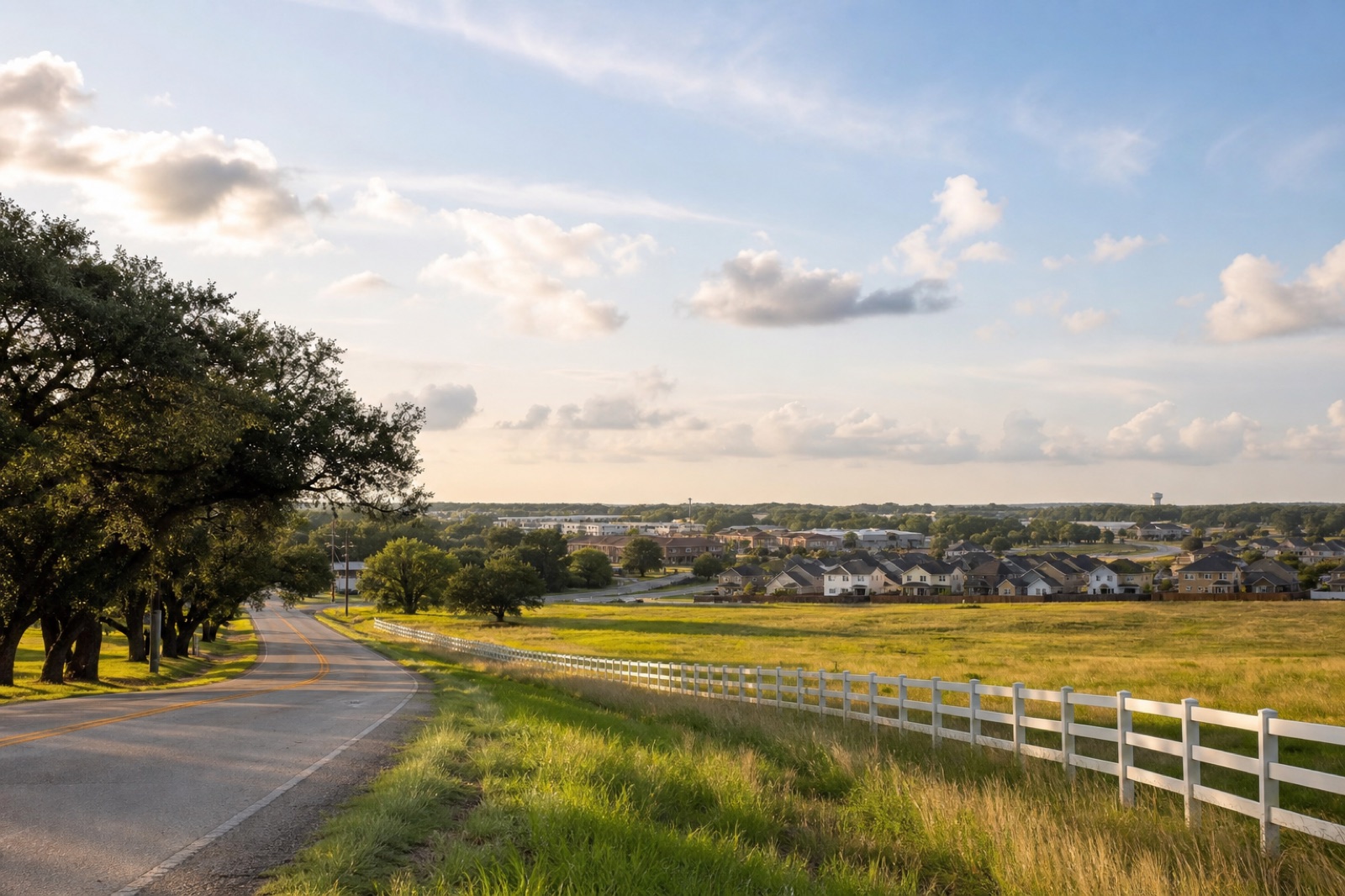
Before buying a home marketed with a Brookshire address, verify the exact parcel—not just the mailing city. City limits, county, school assignment, taxes, utilities or septic, flood information, deed restrictions, builder terms, and daily routes can differ by address. A reliable comparison starts with the parcel record and ends with current confirmation from each responsible authority.
That address-first approach is especially useful when comparing a new-construction home, an acreage property, and a resale home. The property type may change the questions, but it does not replace the need to verify the parcel, the rules that apply to it, and the full cost of ownership.
A Brookshire mailing address is only the starting point
The incorporated City of Brookshire is in Waller County. City information identifies Royal ISD and the Brookshire Municipal Water District in its resident resources, but those references do not prove that every property marketed with a Brookshire mailing address is inside City limits or receives the same services. Start with the City of Brookshire’s resident information, then verify the exact parcel and jurisdiction.
Use the Waller County Appraisal District property search to identify a Waller County parcel, legal description, subdivision, and listed taxing entities. If records indicate the property may instead be in Fort Bend County, use the Fort Bend Central Appraisal District property search. Appraisal-district maps and records are research tools; they do not replace a survey, title commitment, or legal determination.
Before comparing homes, write down:
- the exact street address and parcel or account number;
- the county, incorporated-city status, subdivision, and legal description;
- the agencies responsible for permits, roads, drainage, and floodplain administration;
- every listed taxing entity;
- the school district and current campus assignment;
- water, sewer, MUD, well, or septic responsibility; and
- recorded restrictions, association documents, and property-specific notices.
New construction: compare the contract and the property
A model home, builder website, or incentive advertisement can help with discovery, but it is not a complete due-diligence file. Builder participation, available plans, incentives, completion dates, warranties, community phases, and amenity timing can change. Request the current written terms for the exact home and date.
For property inside City jurisdiction, the City of Brookshire permit page is a starting point for residential construction and flood-zone permit questions. For an applicable unincorporated property, review Waller County permit information. Confirm which authority controls before relying on either process.
Questions to ask about a specific new home include:
- What is included in the signed price, and which selections or fees are separate?
- Which incentives depend on a particular lender, title company, closing date, or financing structure?
- What completion date is written into the contract, and what happens if it changes?
- Which warranties apply, who administers them, and how are claims submitted?
- Which utility, MUD, PID, HOA, and deed-restriction notices apply to the lot?
- Which permits and inspections have been completed, and which remain open?
- What does an independent inspection reveal at the appropriate construction stages?
These are contract- and property-specific questions. A general article cannot confirm the answer for an individual purchase.
Acreage: verify what the land can support
An acreage label does not automatically establish a permitted use. Lot size alone cannot confirm whether a buyer may add a structure, keep animals, subdivide, operate a business, install a well or septic system, build a driveway, or alter drainage.
Review the parcel, recorded plat, easements, deed restrictions, access, flood information, and the correct city or county development rules. If an on-site sewage facility may be involved, Waller County’s environmental department provides the applicable county OSSF permit and inspection path. Do not assume an acreage property uses septic; first determine whether public or district water and sewer are available.
A survey, title documents, soil or engineering evidence, utility-provider confirmation, and qualified professional advice may be needed before treating a planned use as feasible.
Taxes: build the stack from the parcel
There is no single tax rate that safely describes every Brookshire-area property. County, school, city, MUD, emergency-service, and other taxing entities can vary by parcel. Use the appraisal record to identify the entities, then use current tax-office and taxing-unit records to verify rates, exemptions, and bills.
The Texas Comptroller’s local property-tax directory explains the distinction: appraisal questions go to the appraisal district, while rate and bill questions go to the applicable tax assessor-collector. The Comptroller’s property-tax databases can help locate current local records.
For budgeting, compare the full projected payment and ownership costs—not only a base price or an estimated principal-and-interest figure. Obtain property-specific estimates from the appropriate tax, lending, insurance, and title professionals.
Schools: verify the current year and address
The City and district identify Royal ISD as Brookshire’s district context, but a general boundary description does not guarantee a particular district or campus for every Brookshire-labeled property. Royal ISD’s district information is a useful starting point. For a purchase decision, request current address-level confirmation from the district for the applicable school year.
The Texas Education Agency school-finder guidance helps locate districts and schools, but TEA explains that attendance zones are maintained locally. Boundaries can change, so recheck immediately before relying on an assignment. School verification is about jurisdiction and current assignment; buyers should evaluate educational fit using their own criteria and official information.
Flood, drainage, and insurance require separate checks
Use the FEMA Flood Map Service Center to research the effective NFIP map for an exact address. Then add the applicable city or county floodplain and drainage resources, the property survey or elevation evidence, seller disclosures, inspection findings, and insurance information.
A mapped flood zone does not predict whether a specific property will flood, and being outside a mapped high-risk zone does not mean there is no flood risk. The Texas Department of Insurance flood guide also explains that ordinary home coverage generally does not cover flood damage. Ask a licensed insurance professional for property- and buyer-specific coverage information; do not treat an online map as an insurance quote.
Commutes: test the route you will actually use
Avoid relying on one off-peak map estimate. Test likely routes on the days and times that match your routine, including school, work, medical, airport, or family trips that matter to the household. Record the date, departure time, route, and conditions so the comparison is transparent.
Check DriveTexas for current TxDOT construction, closures, and roadway conditions. A route test is a dated observation, not a guaranteed future commute.
A practical Brookshire property-verification checklist
| Question | Start with | What it does not prove by itself |
|---|---|---|
| Which county and parcel? | Waller CAD; Fort Bend CAD if indicated | Legal boundary, survey, or title status |
| Inside City limits? | City of Brookshire and parcel evidence | Every service, utility, or permit fact |
| Which schools? | TEA, CAD, and current district confirmation | Future boundaries or school quality |
| What is the tax stack? | CAD entities plus current tax records | Final future bill or exemption outcome |
| Which utilities or OSSF rules? | City, MUD/provider, or county records | Capacity, connection cost, or approval |
| What flood information applies? | FEMA plus city/county and property evidence | No-risk guarantee or insurance price |
| What construction or acreage rules apply? | Correct permit authority, plat, deed, and contract | Approval of a planned use |
| How does the route work? | Dated real-world test and DriveTexas | Guaranteed travel time |
Brookshire homebuying FAQ
Does a Brookshire mailing address mean the home is inside the City of Brookshire?
No. Treat the mailing city as a search label, then verify the parcel, county, and incorporated-city status with official records. The answer affects which agencies may handle permits, services, drainage, and other property questions.
Which schools serve a Brookshire property?
Royal ISD is the City’s district context, but buyers should confirm the exact district and current campus assignment for the property and school year. Do not rely on a mailing city, subdivision name, listing field, or an older attendance map.
Do Brookshire acreage homes use septic systems?
Some properties may use an on-site sewage facility, while others may have public or district service. Confirm the provider and infrastructure for the exact parcel. If OSSF applies in Waller County, use the county’s current permit and inspection process.
Is there one Brookshire property-tax rate?
No universal rate should be assumed. Pull the parcel’s listed taxing entities, then verify the current rates, bill, and exemptions with the responsible official sources.
What should I verify with a new-construction home?
Verify the exact price and included features, incentive conditions, completion terms, warranty, permits and inspections, utilities, taxes, association documents, flood information, and the buyer’s independent inspection plan. Recheck every time-sensitive representation in writing.
Does being outside a FEMA high-risk flood zone mean the property will not flood?
No. FEMA maps are one part of a broader property review. Consider effective maps, local drainage context, surveys or elevation evidence, disclosures, inspections, and insurance information separately.
How should I compare a Brookshire commute?
Test the actual route at realistic times and note the date and conditions. Check current construction and closures, but treat every result as a snapshot rather than a promise.
Next step
Use the TTG Brookshire real estate guide to orient your search. When you have an address or short list, connect with Tricia Turner Group for a property-specific buyer conversation and an organized verification plan.
Sources and data date
This draft was researched July 31, 2026. Its stable civic framework comes from the City of Brookshire, Waller and Fort Bend appraisal districts, Waller County, Royal ISD, the Texas Education Agency, the Texas Comptroller, FEMA, the Texas Department of Insurance, and TxDOT. Address-dependent facts must be refreshed before publication and again before a transaction decision.
This article is educational and is not legal, tax, lending, insurance, engineering, survey, environmental, or appraisal advice. Rules, boundaries, taxes, services, school assignments, flood information, construction terms, and road conditions can change. Verify an exact property with the responsible agencies and qualified professionals.

Tricia Turner Group
| Tricia Turner Group | Realty of America
or another way